
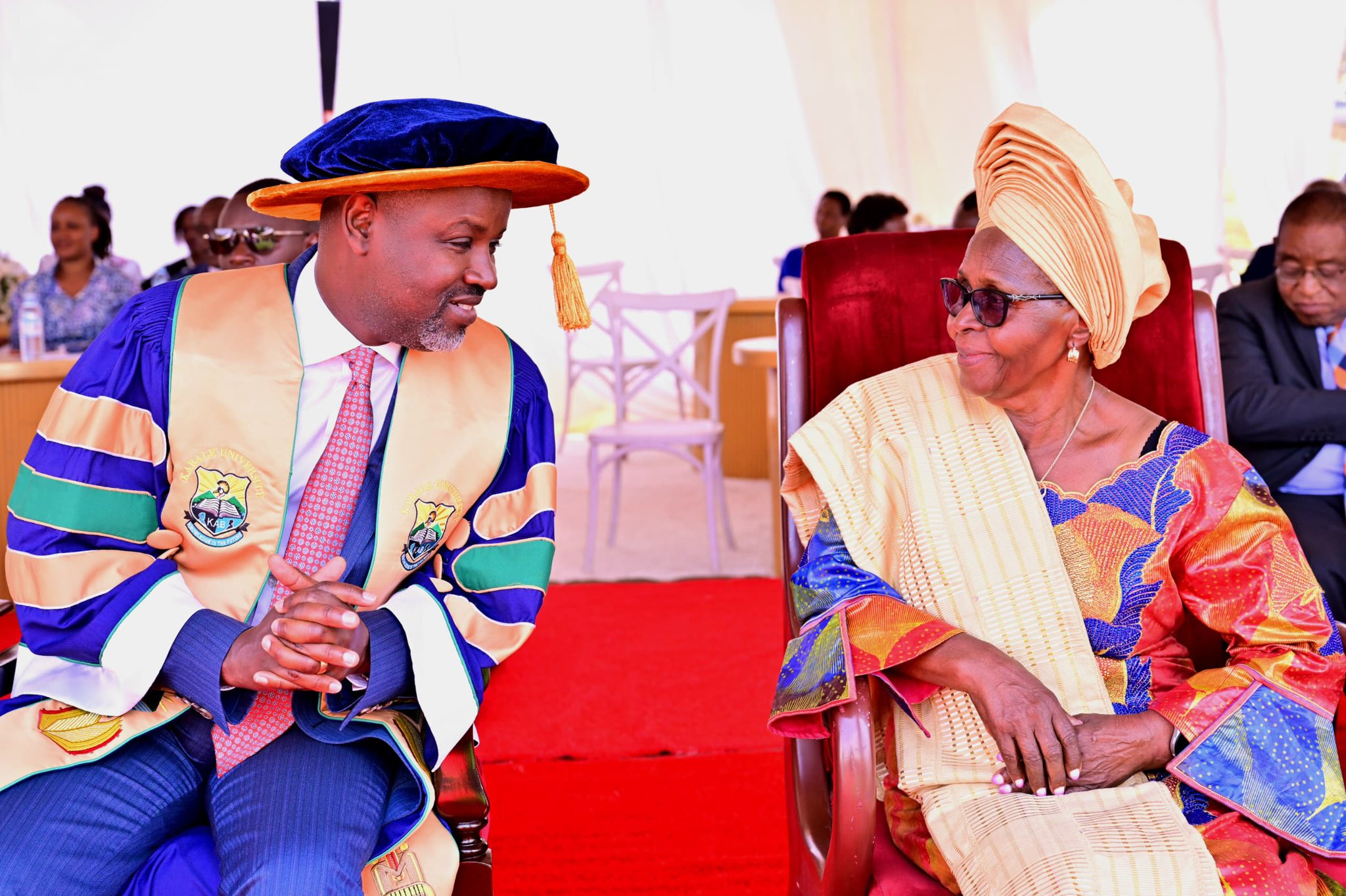
By Peter Mabira
Outgoing Kabale University Vice Chancellor Prof. Joy Constance Kwesiga on Friday 3rd Sept 2026 described the failure to secure additional land for the university’s expansion as one of the major challenges she leaves behind after 21 years of transformative leadership.
In her farewell address held at Kabale University’s Kikungiri Campus, Prof. Kwesiga said despite numerous engagements with Kigezi leaders and stakeholders, she was unable to achieve the full transfer of additional land on Kikungiri Hill required for the university’s long-term 50-year physical development plan.
She said the limited land remains a challenge for the institution’s future growth, noting that a growing public university requires adequate space for infrastructure, academic facilities and expansion.
Prof. Kwesiga said she had failed to convince some leaders to fully appreciate the economic and social contribution of Kabale University to the region, including the thousands of students, staff and businesses that benefit from the institution.
Responding to Prof. Kwesiga’s concerns, Deputy Speaker of Parliament Rt. Hon. Thomas Tayebwa urged Kabale District leaders and stakeholders to resolve the land matter through dialogue, saying the growth of Kabale University is a shared responsibility.
Tayebwa appealed to district leaders to provide the additional land, saying
“the issue simply requires an elder to bring you the two parties together and find a solution, personally I would intervene by calling the leaders for a discussion if the elders fail”
The Deputy Speaker emphasised that adequate land is critical for institutional growth, noting that “a university cannot grow on 50 acres of land only.
Tayebwa urged Kabale University and the wider Kigezi community to make strategic use of their leaders to lobby for support from government.
He highlighted the importance of engaging key ministries, particularly the Ministry of Health and the Ministry of Finance, mentioning Hon. Dr. Chris Baryomunsi, Minister of Health, and Hon. Henry Musasizi, Minister of State for Finance, as leaders whose positions can help advance the university’s priorities.
He said leaders should work together to mobilise resources and create opportunities that support the institution’s continued growth.
Tayebwa described Kabale University as a blueprint for regional public universities, saying its progress as one of Uganda’s first regional public universities inspired government to establish similar institutions across the country.
He credited the university’s founders and early stakeholders for laying the foundation that enabled the institution to grow into a recognised public university.
Kabale University’s rising visibility is reflected in its performance in the 2026 Webometrics University Rankings, where it was ranked 4th among universities in Uganda, 109th in Africa and 4,310th globally.
The ranking recognises universities based on indicators including online visibility, research presence and openness.
Tayebwa said the government has realised that Kigezi is facing major challenges of rising poverty levels and malnutrition, calling upon professors and researchers at Kabale University to conduct studies that will help identify the gaps and provide solutions.
He urged the university to use its expertise, research and innovation capacity to support government in designing effective interventions, noting that an institution becomes more relevant when it directly contributes to solving challenges affecting its community.
Tayebwa commended Kabale University for offering affordable tuition while producing skilled and competent graduates.
He said he is considering reviewing his personal scholarship programme, which supports over 200 students, to prioritise learners in public universities in the coming years.
He explained that giving an example” I find myself paying same tuition amount for one(1) student in a private university and again paying same amount for eight(8) students in a public university”
The remarks came as Prof. Joy Constance Kwesiga concluded her 21-year tenure at Kabale University, during which she guided the institution through its transition from a private university into a public university and oversaw significant institutional transformation.